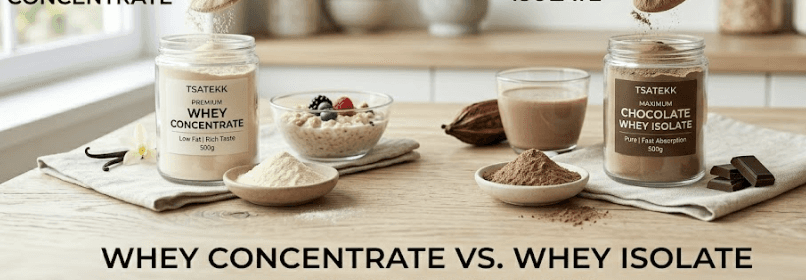
Whey Protein Isolate vs Whey Protein Concentrate: What’s the Difference?
If you have ever wondered whether you should choose whey protein isolate or whey protein concentrate, you are not alone.
Both are high-quality proteins derived from milk, and both can help you meet your daily protein needs. The main difference is not that one is “good” and the other is “bad.” The real difference lies in the filtration process, which changes the amount of protein, lactose, fat, and overall texture.
What is whey protein?
Whey protein comes from milk. During cheese-making, milk is treated with enzymes, which separates it into curds and liquid whey. That liquid whey is then further processed and filtered to create different forms of whey protein.
Before turning it into powder, the liquid whey typically goes through steps such as:
centrifugation to remove residual fat and cheese fines
microfiltration to reduce bacteria and unwanted particles
membrane filtration to concentrate protein
From there, manufacturers can create either whey protein concentrate or whey protein isolate depending on how extensively the whey is filtered.
What is whey protein concentrate?
Whey protein concentrate is usually made using membrane filtration methods such as ultrafiltration or cross-flow filtration. These processes concentrate the protein while removing some of the water, lactose, and minerals.
Because whey concentrate is less heavily filtered than isolate, it retains:
more lactose
slightly more fat
a creamier texture
a richer taste
This is why whey protein concentrate is often more flavorful and more cost-effective.
What is whey protein isolate?
Whey protein isolate undergoes more extensive filtration to remove most of the lactose and fat, resulting in a higher protein percentage by weight.
Compared with concentrate, whey isolate typically offers:
more protein per scoop
very low lactose
very low fat
very low carbohydrates
a lighter texture
Because it contains only very small amounts of lactose, whey isolate is often a better choice for people with lactose intolerance or those who want a leaner protein option.
Whey isolate vs whey concentrate: key differences
Protein content
Whey isolate usually has a higher protein content per scoop than whey concentrate.
For example, in TSA TEKK products:
Whey isolate: 27 g protein per scoop
Whey concentrate: 20 g protein per scoop
If your goal is to get more protein with fewer carbs and fats, isolate usually has the edge.
Lactose content
Whey concentrate retains more lactose than isolate.
That means:
Concentrate may be absolutely fine for many people
Isolate is usually better for people who are lactose intolerant or more sensitive to dairy
3. Fat and carbohydrate content
Since whey isolate is filtered more extensively, it usually contains lower amounts of fat and carbohydrates than concentrate.
This makes isolate appealing for people who want a “cleaner” macro profile, though both can still fit well into a healthy diet.
Texture and taste
Whey concentrate is usually:
creamier
richer
slightly heavier in mouthfeel
Whey isolate is usually:
lighter
less creamy
easier to digest for some people
Neither is inherently better. This comes down to personal preference.
Price
Whey concentrate is generally more affordable than whey isolate because it undergoes less processing.
If budget matters most, concentrate is often the more practical option.
Which is better: whey isolate or whey concentrate?
The answer depends on your needs.
Choose whey protein concentrate if:
you want a more budget-friendly protein
you prefer a creamier texture
you tolerate lactose well
you want a great everyday protein option
Choose whey protein isolate if:
you want more protein per scoop
you want lower lactose, fat, and carbs
you are lactose intolerant or more digestion-sensitive
you prefer a lighter protein option
Does whey isolate build more muscle than concentrate?
Both whey isolate and whey concentrate are excellent protein sources and can support muscle recovery, muscle growth, and daily protein intake.
In real life, the most important factor is usually not whether you choose isolate or concentrate. It is whether you are consistently getting enough total daily protein.
That means both can work extremely well.
The bottom line
Whey protein isolate and whey protein concentrate are both high-quality milk-derived proteins. The main difference is the degree of filtration.
Whey concentrate is creamier, more affordable, and contains a bit more lactose and fat
Whey isolate is leaner, higher in protein per scoop, and contains very little lactose
Both are great options for helping you complete your protein requirement.
The best choice is the one that fits your:
budget
digestion
taste preference
protein goals
Whichever one you choose, what matters most is getting enough protein consistently.