Vitamin B12 + D3 + Folic Acid: A Simple, Evidence-Based Guide
Not everyone needs to supplement with Vitamin B12 and D3. Deficiencies are common in India, but taking more vitamins does not automatically mean better health.
Here’s a clear look at what matters.
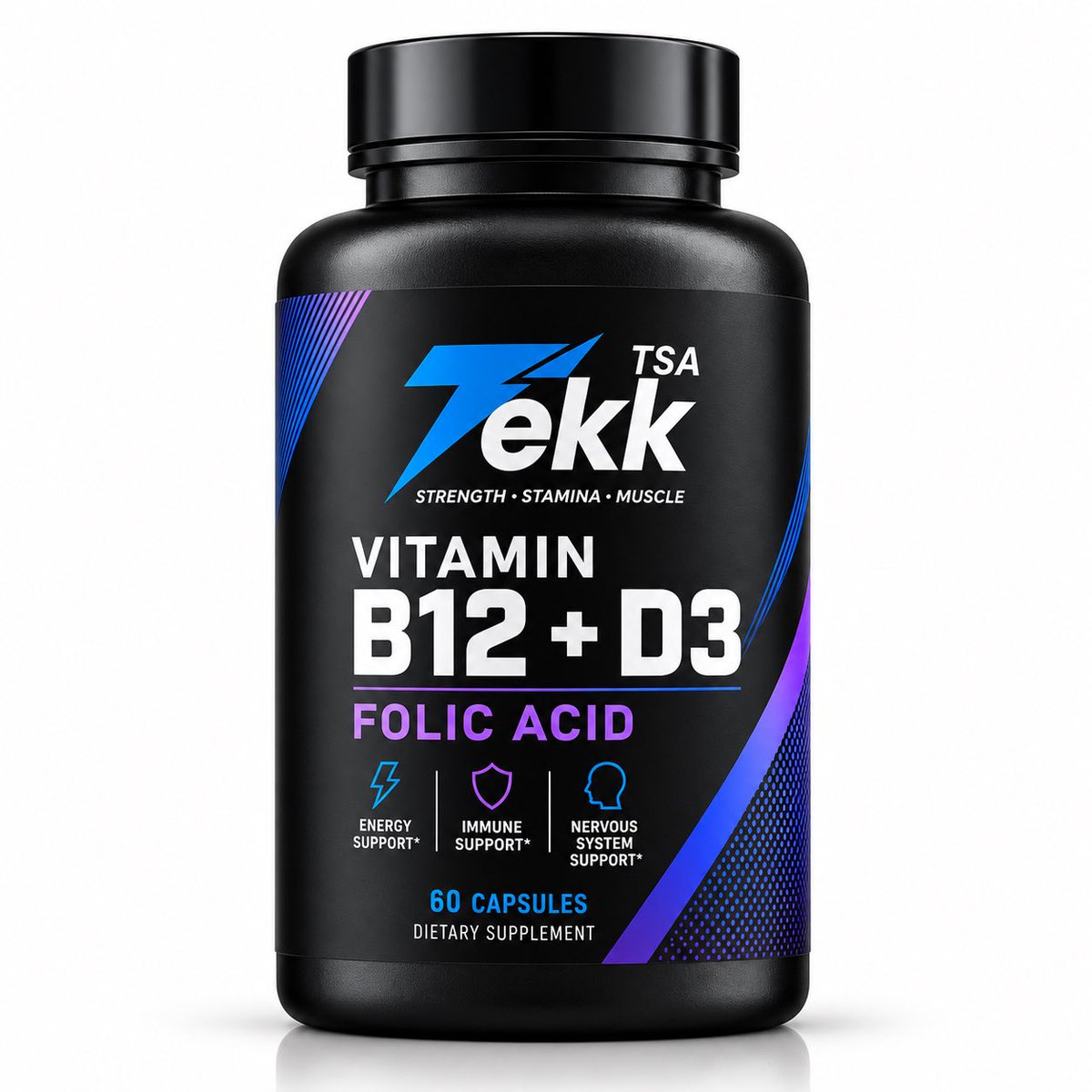
What’s in TSA TEKK Vitamin B12 + D3 + Folic Acid
Each capsule contains:
Vitamin B12: 2.2 mcg (as Cyanocobalamin)
Vitamin D3: 600 IU (from lichen)
Folic Acid: 176.47 mcg
60 capsules | Vegan-friendly
The formulation is designed around practical daily doses that help meet nutritional requirements rather than delivering high amounts.
How common are these deficiencies in India?
A 2022 systematic review and meta-analysis published in the Journal of Nutritional Science analysed data from 270 studies across India and reported:
Vitamin B12 deficiency: 53%
Vitamin D deficiency: 61%
These figures came from 26 studies for B12 and 97 studies for Vitamin D (PMID: 35059191). They are pooled estimates across different populations and methods, not exact national prevalence rates.
Vegetarians, vegans, and people with limited dietary sources of B12 are generally at higher risk of B12 deficiency. Vitamin D deficiency can also occur even in a sunny country, often due to limited outdoor time, indoor lifestyles, or other factors that reduce effective sun exposure.
Normal B12 doesn’t always mean adequate B12
A standard blood test measures total Vitamin B12, which includes both active and inactive forms. Active B12 (holotranscobalamin) reflects the portion available for cells to use.
In some cases, total B12 can appear within the normal range while an underlying functional deficiency is present. When results are borderline or symptoms suggest deficiency, doctors may recommend active B12 testing or methylmalonic acid (MMA) testing for a clearer picture.
Not everyone needs these additional tests. They are typically considered when there is clinical reason to look more closely.
Why adequate Vitamin B12 matters
Vitamin B12 supports several essential functions:
Energy metabolism — helps the body use nutrients
Brain and nerve health — supports normal neurological function
Red blood cell formation — helps prevent B12-deficiency anaemia
DNA synthesis — important for healthy cell function
Low B12 can contribute to fatigue, weakness, tingling, and nerve-related symptoms.
Vitamin D3: What levels are considered adequate?
According to the US National Academies:
Below 12 ng/mL: risk of deficiency
12–20 ng/mL: may be inadequate
20 ng/mL or higher: generally adequate for most healthy people
The 2024 Endocrine Society guidelines do not recommend a universal target of 30 ng/mL for healthy adults. They suggest that generally healthy adults under 75 years should meet their recommended Vitamin D intake (typically 600 IU / 15 μg daily for most adults) through diet, fortified foods, sunlight, or supplements as needed — without routinely taking higher doses for additional health benefits.
Higher-than-recommended empiric supplementation is suggested only for specific groups (children and adolescents, adults ≥75, pregnant people, and those with high-risk prediabetes), and even then without routine 25(OH)D testing.
If your level is below 20 ng/mL, Vitamin D may be inadequate, particularly for bone health. Correcting confirmed low levels can be important, and significant deficiency may require higher doses under medical guidance.
Practical recommendations
Adults aged 19–70: Aim for 600 IU daily from foods, sunlight, or supplements combined.
Blood testing is not routinely necessary for every healthy adult, but it can be useful when medically indicated.
Significant deficiency should be managed with appropriate medical advice.
Vitamin D is essential, but more is not always better. The focus is on correcting deficiency when present and meeting daily requirements.
Our approach at TSA TEKK
We formulated TSA TEKK Vitamin B12 + D3 + Folic Acid with 600 IU of Vitamin D3 as a practical daily dose to help meet nutritional requirements, particularly when dietary intake and sunlight exposure are limited.
Not everyone needs supplements, and higher doses are not automatically better. The goal is adequate nutrition — eating well, checking for deficiencies when appropriate, and supplementing according to individual needs.
Disclaimer: This article is for educational purposes and does not replace medical advice. Nutritional requirements and treatment doses depend on individual circumstances. Consult a healthcare professional for personalised guidance.
References:
https://pubmed.ncbi.nlm.nih.gov/35059191/
https://nice.org.uk/guidance/ng239/chapter/Recommendations
https://pubmed.ncbi.nlm.nih.gov/38828931/
https://ods.od.nih.gov/factsheets/VitaminD-HealthProfessional/
https://ods.od.nih.gov/factsheets/VitaminB12-HealthProfessional/
https://doi.org/10.2337/dc26-S005
https://pmc.ncbi.nlm.nih.gov/articles/PMC11124153/
https://endocrinenews.endocrine.org/to-d-or-not-to-d-what-questions-does-the-latest-endocrine-society-guideline-answer-about-vitamin-d-supplements/
https://pubmed.ncbi.nlm.nih.gov/38828931/
https://pubmed.ncbi.nlm.nih.gov/42124077/
This post reflects our evidence-informed approach to micronutrients. For product details, visit tsatekk.com/vitamins-minerals.