Xanthan gum often sounds like one of those ingredients people get suspicious of just because the name sounds chemical.
But xanthan gum is not some mysterious synthetic compound.
It is simply a polysaccharide, a type of carbohydrate, produced through fermentation by a bacterium called Xanthomonas campestris. This bacterium is naturally associated with plants and can be found on vegetables such as cabbage, broccoli, and cauliflower.
When fed sugars, usually from sources like corn, wheat, or soy, the bacterium ferments them and produces xanthan gum. In simple terms, the process is not that different in principle from how humans use fermentation to make foods like sourdough or kefir.
What is xanthan gum used for?
Xanthan gum is widely used in the food industry because it works extremely well as a stabilizer, thickener, and texture-improving ingredient.
It helps products maintain a smooth, consistent texture and prevents ingredients from separating.
You will commonly find xanthan gum in:
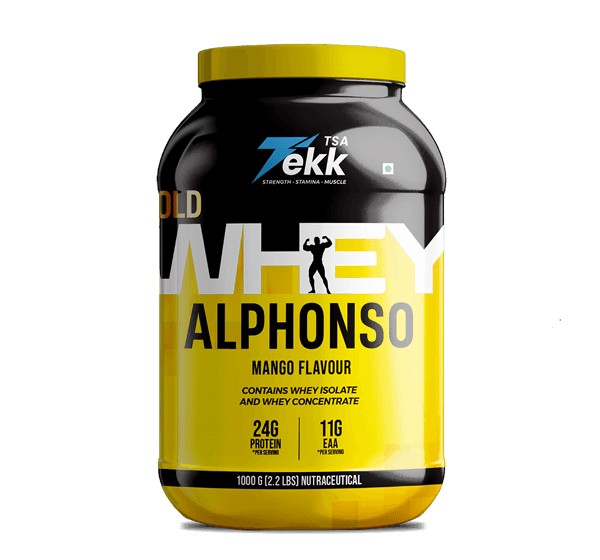
whey protein powders
protein shakes
gluten-free breads
salad dressings
sauces
soups
syrups
yogurt
ice cream
Why is xanthan gum added to whey protein?
In whey protein, xanthan gum is usually added in very small amounts to improve the overall drinking experience.
It helps by:
improving creaminess
increasing smoothness
reducing clumping
improving suspension
preventing gritty texture
helping the powder stay evenly mixed in liquid
In other words, it helps make your shake feel better and mix better.
It does not meaningfully reduce protein quality or amino acid availability.
Is xanthan gum safe?
For the general population, xanthan gum is considered safe at the levels typically used in foods and supplements.
It has been used in food products for decades, and major food safety authorities have reviewed it extensively.
Regulatory and scientific safety overview
U.S. FDA
Xanthan gum has long been permitted for use in food and is widely recognized as safe under approved food use conditions.
EFSA
European safety evaluations have not identified safety concerns for the general population at current levels of dietary exposure.
Scientific studies
Available research has not shown evidence that xanthan gum is carcinogenic, mutagenic, or harmful to development at normal intake levels. Human studies using doses much higher than typical dietary intake have generally reported good tolerance, though gastrointestinal symptoms can occur at high doses in some individuals.
How much xanthan gum is usually in whey protein?
The amount used in whey protein is typically very small.
A common range is around 0.3% to 0.5% of the total product.
That means in one scoop of whey protein:
30 g scoop = about 0.09 to 0.15 g
33 g scoop = about 0.1 to 0.17 g
So a typical scoop may contain roughly 0.1 g of xanthan gum, which is a very small amount.
How much xanthan gum do people usually consume?
Typical dietary exposure is generally low, often well under 1 gram per day, depending on the diet.
Here are some rough examples of how xanthan gum may appear in foods:
Whey protein scoop: around 0.09 to 0.2 g
100 g gluten-free bakery product: around 0.1 to 1 g
100 g salad dressing or sauce: around 0.2 to 0.5 g
100 g yogurt or ice cream: around 0.1 to 0.3 g
Even with multiple processed foods in a day, reaching very high intakes is unlikely unless someone is regularly consuming large amounts of xanthan gum-heavy foods, especially certain gluten-free products.
Why is xanthan gum so useful in food?
Xanthan gum is popular because it performs well under conditions where many ingredients become unstable.
It works well in the presence of:
heat
acid
salt
freezing
thawing
That makes it especially useful in commercial food formulation.
In whey protein shakes
Xanthan gum helps:
reduce grittiness
improve smoothness
keep particles suspended
reduce separation during drinking
In gluten-free baking
Xanthan gum helps:
mimic some of gluten’s structural role
improve elasticity
improve softness and texture
In yogurt and ice cream
Xanthan gum helps:
reduce ice crystal formation
improve creaminess
support texture without needing more fat
Does xanthan gum have side effects?
At normal food intakes, side effects are uncommon.
At much higher doses, especially around 10 grams or more per day, some people may experience:
bloating
gas
softer stools
That is not unusual for fermentable or soluble fibers. It is not evidence of toxicity. It is more similar to what can happen if someone suddenly consumes too much fiber, beans, or certain sugar alcohols.
What if someone has corn, soy, or wheat allergies?
Xanthan gum itself is not considered a major allergen.
However, because the sugars used during fermentation may come from corn, soy, or wheat, people with severe allergies may want to be cautious and check sourcing if relevant.
That said, the fermentation and purification process is designed to remove residual proteins, and the final xanthan gum ingredient usually contains negligible if any allergenic protein.
For anyone with a severe allergy, it is reasonable to consult a doctor or qualified healthcare provider.
Does xanthan gum make whey protein unhealthy?
No.
The presence of xanthan gum in whey protein does not make the product unhealthy. It is usually there for functional reasons, mainly to improve texture, mixability, and stability.
The amount used is very small, and for most people it is not something to fear.
The bottom line
Xanthan gum is a fermentation-derived carbohydrate used in very small amounts to improve the texture, stability, and consistency of foods and supplements.
In whey protein, it helps make shakes smoother, less gritty, and better mixed.
At the doses normally consumed, xanthan gum appears to be well tolerated for most people. Very high intakes may cause mild digestive symptoms in some individuals, but that is not the same as toxicity.
So no, xanthan gum is not something people should automatically panic about just because the name sounds unfamiliar.
Ingredients should be judged by dose, function, and evidence, not by fear.
Disclaimer
The information provided in this article is intended solely for educational and informational purposes. It is not medical advice, health advice, or a substitute for professional consultation with a licensed healthcare provider, physician, or registered dietitian.
Always consult your doctor or a qualified medical professional before making changes to your diet, supplement use, or health routine.
References
https://pmc.ncbi.nlm.nih.gov/articles/PMC7009887/
https://pmc.ncbi.nlm.nih.gov/articles/PMC8323031/
https://pubmed.ncbi.nlm.nih.gov/38315314/